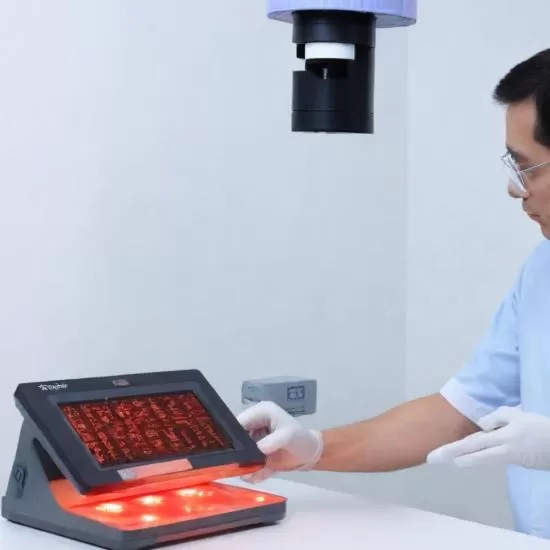
KOH MOUNT FOR FUNGAL DISEASES
Quick, Accurate Testing for Fungal Skin Infections
At Signature Skin, Dr. Shantanu Choudhary and Dr. Swati Mogra use KOH mount testing to quickly confirm fungal skin infections and guide targeted treatment. This simple in-office test delivers fast, reliable results.
Understanding KOH Mount Testing
A KOH mount is a simple in-office test where a skin, hair, or nail sample is treated with potassium hydroxide and examined under a microscope to detect fungal elements. It provides fast confirmation of fungal infections, helping guide targeted treatment.
When Is a KOH Mount Needed
This test is used when a fungal infection such as ringworm, athletes foot, or nail fungus is suspected but needs confirmation before starting treatment.
Our Testing Approach
Sample Collection: We collect a small sample from the affected skin, hair, or nail.
Immediate Examination: The sample is examined under a microscope during your visit.
Same-Visit Results: Findings are typically available before you leave.
Targeted Treatment: Antifungal treatment is recommended based on confirmed findings.
Our Approach
Fast, Reliable Testing: We prioritize prompt, accurate results to start treatment sooner.
Minimally Invasive: Sample collection is quick and generally well-tolerated.
Clear Communication: We explain findings and treatment options immediately.
Follow-Up Care: We monitor response to treatment and retest if needed.
If you suspect a fungal skin, hair, or nail infection, book a consultation with our dermatology team in Jaipur for prompt testing.
Frequently Asked Questions
Q. What is a KOH mount test?
A KOH (potassium hydroxide) mount is a quick microscopic test where a skin, nail, or hair sample is treated with a solution to help visualize and confirm fungal infections.
Q. Is the KOH test painful?
No, it typically just involves a gentle skin scraping, nail clipping, or hair sample, causing minimal to no discomfort.
Q. How fast are KOH test results available?
Results are often available the same day, since the sample can be examined under the microscope shortly after collection.